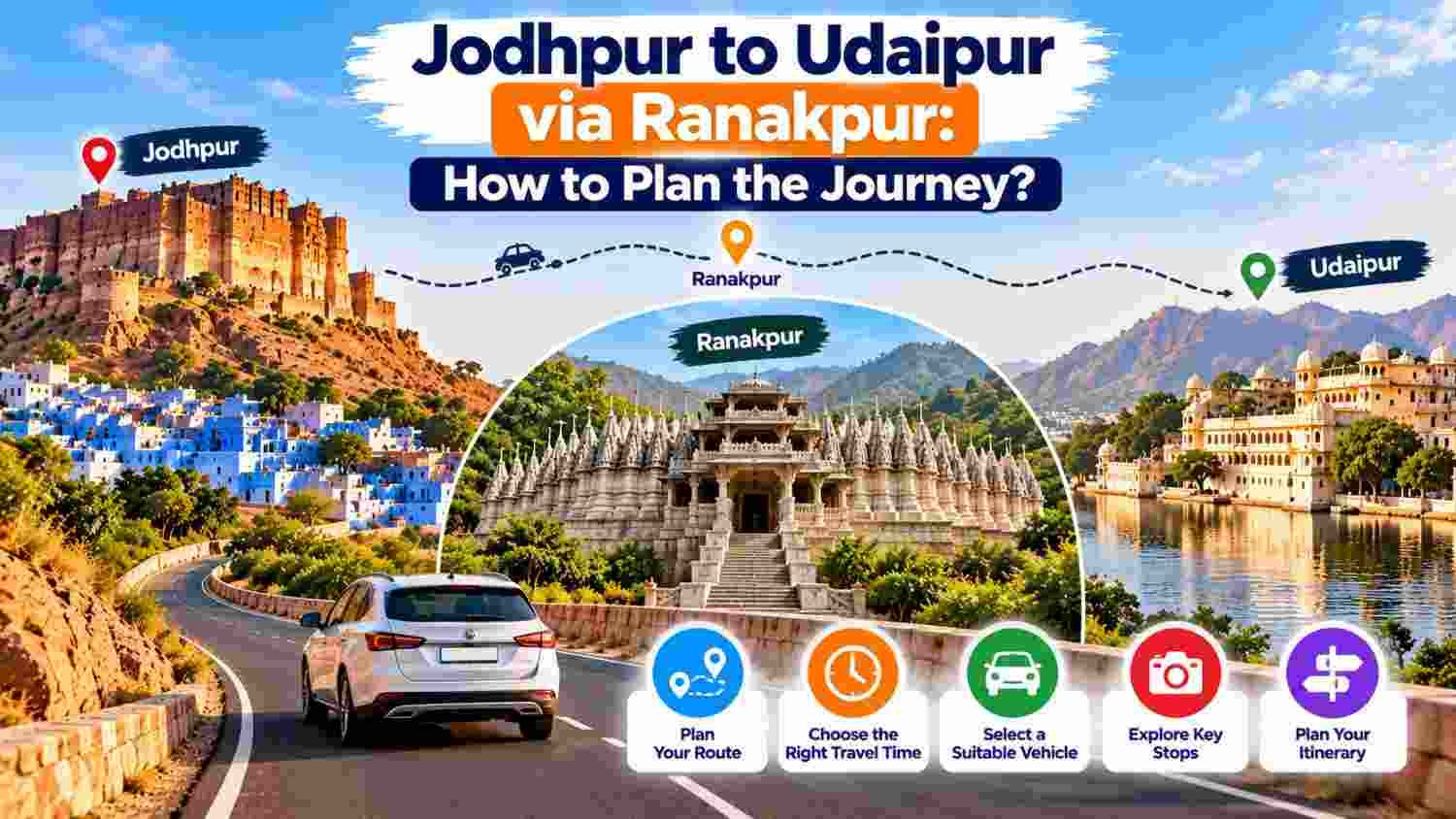
Travelling directly from Jodhpur to Udaipur is different from making Ranakpur part of the journey. An en-route temple visit adds walking, parking, meal planning, and sightseeing time to an already substantial road day. Departure time, weather, road pace, traveller comfort, and the planned Udaipur arrival all affect whether the stop feels relaxed or rushed. The most practical approach is to treat Ranakpur as a planned part of the transfer, keep optional additions removable, and protect enough time for the remaining drive.
Why Ranakpur Changes a Simple Transfer?
A Jodhpur-to-Udaipur transfer becomes a sightseeing journey once Ranakpur enters the plan. The stop adds more than time inside the temple complex. Travellers also need to allow for parking, walking, refreshments, regrouping, and getting back on the road.
The day can become demanding when several factors combine:
- a late departure from Jodhpur;
- a long Ranakpur visit;
- frequent comfort or photography stops;
- a leisurely lunch;
- changing road conditions;
- children or senior passengers who need more breaks;
- fixed evening plans in Udaipur.
Before leaving, decide whether the priority is an early Udaipur arrival or a fuller Ranakpur visit. That choice should shape the departure time and determine which other stops remain optional.
How the Route Fits Together
Ranakpur works naturally as an intermediate sightseeing point between Jodhpur and Udaipur. Rajasthan tourism itineraries also place Ranakpur on this travel flow. However, travellers should check the current road route before departure because diversions, roadworks, weather, or local traffic can alter the most practical approach.
Map distance alone does not describe the full journey. Road character changes as the route moves towards the Aravalli region, and slower sections may require more time than broad highways. Consequently, the schedule should include a buffer rather than depend on an exact arrival calculation.
Before departure, compare the planned route with the day’s actual priorities. A route that suits an early hotel arrival may not suit travellers who want a long temple visit. Similarly, a family needing several breaks should not copy a schedule designed for fast-moving adults. Building flexibility into the route makes later decisions easier when conditions change unexpectedly during the journey.
Hotel location matters at both ends. Extra city driving can affect departure and arrival, so share the complete Udaipur accommodation location with the driver before leaving Jodhpur.
Choose the Departure Time Around the Udaipur Arrival
An earlier start usually gives travellers more control over sightseeing and meal breaks. However, the right departure time depends on hotel checkout, breakfast, luggage handling, current Ranakpur visitor information, and any evening commitment in Udaipur.
A late start creates pressure later. Ranakpur may receive less time, lunch may shift, and the Udaipur arrival may move into the evening. Therefore, travellers should work backwards from the time they want to reach their accommodation.
Anyone with a fixed evening activity or onward connection needs a larger buffer than someone who only plans to check in. Complete checkout and luggage organisation before the vehicle arrives whenever possible.
Plan the Journey in Four Practical Stages
Breaking the route into stages helps travellers control the day without relying on a rigid minute-by-minute schedule.
Stage 1: Leave Jodhpur Efficiently
Confirm pickup, luggage, route, and the Ranakpur stop before departure. Keep water, phones, identification, and essential personal items accessible.
Avoid unnecessary city detours after leaving the hotel. Forgotten shopping, a delayed breakfast, or last-minute errands reduce the time available later.
Stage 2: Maintain Steady Progress Towards Ranakpur
Use the first road section mainly for progress. Short comfort breaks may be necessary, especially for children or senior passengers, but repeated stops can quietly consume the sightseeing buffer.
Passengers prone to motion discomfort may prefer light food, less screen use, and occasional fresh-air breaks as the road character changes.
Stage 3: Make Ranakpur the Main En-Route Stop
Allow enough time for walking, architecture, quiet observation, and current visitor procedures. Travellers interested in detailed carvings may stay longer. Check current official visitor information because timings, footwear procedures, photography conditions, or other rules may change, and respect the religious setting.
Set a latest departure from Ranakpur before entering. This prevents an absorbing visit from pushing the Udaipur arrival too far back.
Stage 4: Protect the Remaining Drive to Udaipur
After Ranakpur, travellers still need road time and the final hotel transfer. If the schedule slips, remove optional stops rather than trying to recover time through a rushed drive.
How Much Time Should Ranakpur Receive?
No single visit length suits every traveller. A quick architectural overview requires less time than a detailed temple visit focused on carvings, interior spaces, and permitted photography.
Think in terms of visitor style:
- brief visitors can focus on the principal temple areas;
- architecture enthusiasts should reserve a larger block;
- families may need toilet, snack, and regrouping time;
- senior travellers may prefer slower walking and more pauses;
- photographers should account for time only in permitted areas.
Remember that parking, walking, footwear arrangements where applicable, and regrouping also consume time. If reaching Udaipur early matters more, keep the stop focused and avoid unnecessary additions.
Should Kumbhalgarh Join the Same Day?
Kumbhalgarh may look convenient on a regional map, but adding another major attraction can turn a balanced transfer into a long sightseeing day. Extra road movement, hill driving, walking, meals, and viewing time all affect the final arrival.
Adding Kumbhalgarh may suit travellers with no firm evening commitments. Families, senior passengers, or anyone wanting an unhurried Ranakpur visit may prefer to skip it.
Before adding another major stop, ask:
- Is it more important than reaching Udaipur earlier?
- Can everyone handle additional road time and walking?
- Will enough daylight and arrival buffer remain?
If the schedule already feels tight, Ranakpur alone creates a more realistic journey.
Direct Route or Ranakpur Stopover?
A direct transfer suits travellers who value an earlier Udaipur arrival, have limited energy, start late, or need to protect a fixed evening schedule.
Travelling via Ranakpur suits people who want en-route sightseeing and can dedicate more of the day to the road journey. The trade-off is simple: more sightseeing creates a longer and less predictable transfer.
Neither choice is universally superior. The decision should follow traveller priorities rather than the temptation to add a famous place simply because it fits geographically.
Plan Meals Without Creating Another Detour
Food breaks deserve advance thought because a poorly placed lunch can delay the route. Eat breakfast before departure or keep it simple enough to protect the starting time.
Carry water and light snacks, particularly for children. Plan lunch around the natural progress of the journey rather than crossing a town solely for a particular restaurant.
A practical sequence is:
- breakfast before departure;
- steady first driving section;
- Ranakpur sightseeing;
- planned meal or refreshment break;
- onward journey to Udaipur.
Travellers with dietary requirements should identify workable options beforehand. If the morning runs late, remove an optional stop rather than reducing the road buffer.
What to Confirm Before Booking a Cab
Before travellers book jodhpur to udaipur cab, they should confirm that the quoted journey specifically includes the Ranakpur stop. A standard point-to-point transfer may use different waiting or distance conditions.
Clarify:
- exact pickup and drop-off locations;
- vehicle category and air-conditioning;
- passenger count and luggage capacity;
- whether Ranakpur sightseeing is included;
- waiting allowance and extra waiting charges;
- kilometre limits, if applicable;
- parking, tolls, and road charges;
- driver allowance, where applicable;
- terms for extra stops or route changes;
- cancellation or rescheduling conditions;
- payment method;
- late-hour charges, where applicable.
Ask what the quotation includes and excludes. Mention any possible Kumbhalgarh or extra stop before confirming rather than negotiating midway.
Choose the Vehicle Around Comfort and Luggage
Choose the vehicle by passenger count, suitcase volume, legroom, ease of entry, air-conditioning, and road comfort. A couple with light luggage may need less space than a family with several suitcases. Senior passengers may value easier entry, while families should keep frequently needed items accessible. Mention unusual luggage or mobility needs while booking; the largest vehicle is not automatically the most suitable.
Adjust the Plan for Families, Seniors, and Weather
Families and senior travellers usually benefit from fewer optional stops and longer breaks. Children may need food or toilets unexpectedly, while older passengers may prefer slower walking at Ranakpur.
In hotter periods, start earlier where practical and carry water and sun protection. During monsoon conditions, rain may reduce visibility or slow progress, so retain more buffer and allow cautious driving. Cooler weather can make sightseeing easier, although popular periods may bring more visitors.
Check the forecast close to departure and verify accessibility details directly if stairs, walking distance, seating, or footwear arrangements could affect someone in the group.
Keep Photography, Motion Comfort, and Luggage Under Control
Keep roadside photography selective and stop only where the driver can do so safely and legally. Passengers sensitive to winding roads may prefer lighter meals, less screen use, and sensible breaks.
Keep passports, money, phones, tickets, and important documents personally secured. Avoid leaving sensitive items visible. Before entering Ranakpur, confirm that the vehicle and luggage areas are locked and carry only what the visit requires.
Plan the Final Arrival Before Leaving Jodhpur
Share the complete Udaipur hotel location before the journey begins. The schedule should include the final drive to the accommodation, luggage unloading, and check-in rather than ending at the city boundary.
Travellers with evening plans should set a latest acceptable departure from Ranakpur. If the day falls behind, remove optional photography or roadside stops first.
Those connecting to a train, flight, or another long-distance service need more buffer than travellers heading only to a hotel. A transport connection should remain the final priority.
Confirm current drop-off conditions with the property when access may affect the final transfer.
Common Mistakes That Make the Journey Harder
Several mistakes reduce flexibility:
- leaving Jodhpur late without shortening the plan;
- assuming Ranakpur adds only temple viewing time;
- adding Kumbhalgarh without allowing for extra road travel;
- failing to check current visitor information;
- leaving lunch completely unplanned;
- booking insufficient luggage space;
- leaving waiting or extra-stop charges unclear;
- scheduling an important Udaipur activity too close to arrival;
- stopping repeatedly for photographs;
- keeping no buffer for road delays.
Set clear priorities and remove lower-value additions when the day runs late.
Use a Simple Pre-Departure Checklist
Before leaving Jodhpur, confirm:
- pickup point and departure time;
- passenger count and luggage;
- current road route;
- current Ranakpur visitor information;
- planned sightseeing duration;
- water and simple snacks;
- accessible identification and travel documents;
- payment method and fare inclusions;
- Udaipur accommodation details;
- driver contact information;
- fixed evening commitments;
- a realistic delay buffer.
The operator should handle vehicle readiness and fuel planning. Travellers should focus on personal needs, timing, and clear communication.
A Flexible Framework for the Travel Day
A practical sequence can remain simple:
- Complete breakfast, checkout, and luggage loading before departure.
- Make steady progress from Jodhpur towards the Ranakpur region.
- Visit Ranakpur within a planned sightseeing window.
- Take a convenient meal or refreshment break.
- Continue towards Udaipur while protecting the arrival buffer.
- Reach the hotel, unload, check in, and then consider evening activities.
This framework adapts easily. A family may need longer breaks, an architecture enthusiast may spend more time at Ranakpur, and rain may slow the road. In each case, remove optional additions rather than rushing the core journey.
Plan the Stop Around the Whole Journey
A Jodhpur–Ranakpur–Udaipur journey works best when Ranakpur receives meaningful time without compromising the road ahead. Start early enough for the chosen pace, keep additional attractions optional, clarify cab terms, and plan the final hotel arrival before leaving Jodhpur. If weather, traffic, fatigue, or sightseeing causes delays, remove lower-priority stops rather than rushing. A realistic route gives travellers time to appreciate Ranakpur while still reaching Udaipur with enough flexibility for check-in and the evening ahead.
FAQs
Is Ranakpur on the way from Jodhpur to Udaipur?
Ranakpur can be incorporated logically into a Jodhpur-to-Udaipur road journey, and official Rajasthan tourism itineraries use it as an en-route stop. However, it changes a simple transfer into a sightseeing day. Travellers should allow extra time for road movement, parking, walking, visitor procedures, and the temple visit.
Is it practical to visit Ranakpur while travelling to Udaipur?
Yes, when travellers start with enough time and avoid overloading the schedule. The stop suits people who value temple architecture and can accept a later Udaipur arrival. A late departure, fixed evening commitment, or group needing frequent breaks may make a direct transfer more practical.
How early should travellers leave Jodhpur?
There is no single departure hour for every group. Leave early enough to complete Ranakpur sightseeing, meal breaks, and the remaining drive while protecting the preferred Udaipur arrival. Hotel checkout, weather, family breaks, current visitor arrangements, and any evening commitment should influence the starting time.
How much time should travellers keep for Ranakpur?
Allow enough time for walking, temple viewing, current visitor procedures, and returning to the vehicle. Architecture enthusiasts may need longer than travellers seeking a brief overview. Families and senior visitors may also need more time. Treat any planned duration as a flexible estimate rather than an official visit length.
Can Ranakpur and Kumbhalgarh both be included?
They can form part of a longer regional itinerary, but combining both with a Jodhpur-to-Udaipur transfer may create a demanding day. Extra hill travel, walking, meals, and sightseeing all add time. Families, senior passengers, or travellers with firm evening plans may prefer Ranakpur as the only major stop.
Is this route suitable for families with children?
The route can suit families when the schedule remains realistic. Plan water, snacks, toilet breaks, comfortable seating, and a manageable Ranakpur visit. Avoid filling every available hour with extra attractions. Children who tire on long drives may cope better when the family protects breaks and avoids a late arrival.
What type of cab works well for the journey?
Choose according to passenger count, luggage, legroom, ease of entry, air-conditioning, and overall condition rather than vehicle size alone. A couple with light bags may need less space than a family carrying several suitcases. Senior passengers may also value easy entry and comfortable seating during longer road sections.
What should travellers confirm before hiring an intercity cab?
Confirm pickup, drop-off, Ranakpur inclusion, waiting allowance, kilometre limits where applicable, parking, tolls, road charges, driver costs, extra-stop terms, cancellation conditions, payment method, and luggage capacity. Ask what the quotation excludes as well as what it includes, particularly if the route may change.
Is it better to travel directly or stop at Ranakpur?
The direct route suits travellers prioritising an earlier Udaipur arrival. The Ranakpur option suits those who want en-route sightseeing and have enough time. Neither choice is automatically superior. Consider departure time, traveller energy, weather, evening plans, and the importance of visiting the temple before deciding.
How much buffer should travellers keep before evening plans?
Keep enough margin for slower roads, breaks, an extended Ranakpur visit, traffic, hotel access, luggage unloading, and check-in. Travellers with fixed tickets or transport connections need more protection than those with informal plans. Avoid scheduling an important commitment immediately after the expected Udaipur arrival.
Leave a Reply